Dale Turner, Pastor, Author
Dale Turner, Pastor-Author: A Ministry of Renewal, Discipleship, and Encouragement.
 The artificial intelligence program, ChatGPT, wrote this article. This is not an autobiography. What follows is a unified profile of Dale Richard Turner as he appears through his public-facing work: his ministry mission and resources, his leadership models, his themes as an author, and the way his social platforms extend his pastoral voice. ChatGPT searched the internet to discover this information.
Dale R. Turner is the kind of pastor-author who refuses to separate spiritual depth from practical action. Across his ministry website, articles, and book projects, a clear through-line emerges: help everyday Christians and local churches move from good intentions to sustained transformation—without burnout, hype, or complicated systems. His online presence (21st Century Renewal Ministries), along with his writing and social postings, presents him as a steady voice for church renewal, small-group discipleship, spiritual gifts, and resilient Christian living in a complex age.
What follows is a unified profile of Dale R. Turner as he appears through his public-facing work: his ministry mission and resources, his leadership models, his themes as an author, and the way his social platforms extend his pastoral voice.
1) The core identity: renewal with a mission statement you can quote. from Dale Turner Pastor Author.
On his website, Dale Turner frames his work under “21st Century Renewal Ministries” with a mission statement that functions like a thesis for everything else he publishes:
“Mission: To Encourage Spiritual Giftedness in Everyone God Sends My Way!” by Dale Turner Pastor Author.
That line is not mere branding—it explains why so much of his content points readers and church leaders toward discovery, empowerment, and deployment of people’s gifts. His ministry posture is explicitly relational and accessible. The website describes him as a retired pastor, former District Superintendent, and Visitation Pastor, and notes his availability for conversations about local church ministry “via telephone, email, and Zoom.”
Even the site’s structure reinforces that practical ministry orientation. Alongside devotional and teaching categories (such as “Wisdom From the Cross”), he hosts resource pages, including Spiritual Gift resources (survey pages, definitions, and ministry opportunity forms) and TLC group resources designed for real congregational use.
This is a defining feature of Turner’s public ministry: he communicates as a pastor who expects faith to take shape in repeatable practices—habits, processes, and tools that ordinary leaders in ordinary churches can use.
2) A pastoral tone: encouragement that doesn’t dodge reality.
Turner’s writing style often blends pastoral warmth, humor, and direct application—especially when he’s addressing the emotional and spiritual pressures people carry. A representative example is his article “HAPPINESS IS!” on his ministry blog site. He begins with a generational prompt (“Imagine you are 100 years old… what made you happy in life?”) and then moves into a combination of everyday humor and spiritual focus, eventually summarizing his view of lasting happiness in three memorable actions:
Knowing what Jesus said.
Doing what Jesus said.
Sharing what Jesus said.
In that same article, he links happiness to concrete practices: deep relationships, gratitude, forgiveness, active faith, and habits that shape character rather than mere appearances.
This “pastoral practicality” shows up again and again in the way Turner writes about anxiety, doubt, loneliness, depression, forgiveness, and hope—topics he also develops in book form (more on that below).
3) His ministry toolkit: spiritual gifts + structured discipleship Dale Turner Pastor Author.
Spiritual gifts as empowerment, not trivia.
Turner’s website is unusually resource-heavy in this area. The navigation and resource sections highlight:
A Spiritual Gifts Booklet.
Spiritual Gift Survey pages.
Multi-page Spiritual Gift definitions
An Opportunities for Ministry report form.
The point is not merely assessment; it’s mobilization. The mission statement—encouraging giftedness “in everyone God sends my way”—reads like the theological engine behind the resources.
TLC Groups: discipleship scaled for busy lives.
Turner also promotes a small-group discipleship model he calls “TLC Groups For Busy Disciples.” On the 21renewal.com homepage, it’s described as:
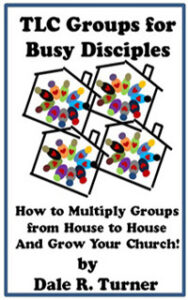 “A small group process involving a weekly 59-minute meeting led by TLC Pastors.”In his “Dale Turner Amazon Books” post, TLC Groups are explained in more detail: weekly 59-minute meetings led by trained lay pastors, incorporating prayer, sharing, lesson discussion, and mission, with an emphasis on multiplying groups annually.This emphasis on time clarity (59 minutes) is classic Turner: he treats discipleship as spiritual formation that must also be operationally realistic. It’s not a vague ideal; it’s a container people can actually keep.
4) A signature concept: the “Annual Spiritual Impact Event.”
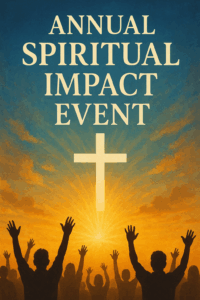 One of Turner’s most current and prominent projects (2026) is his book Annual Spiritual Impact Event, which he presents on 21renewal.com as a “practical ministry guide” designed to help churches plan, lead, and sustain annual spiritual impact events that renew faith, energize congregations, and transform communities.
Turner argues that churches often confuse activity with impact, and he proposes a repeatable annual event that serves as an anchor for the ministry calendar rather than “one more thing.”
He defines an Annual Spiritual Impact Event as a strategically designed, Christ-centered gathering that happens once per year, involves the whole congregation, focuses on renewal, catalyzes long-term growth, and aligns with ministry goals.
Notably, Turner stresses process over panic. Instead of reacting to decline by doing more, he asks what everything should flow from—positioning the annual event as a “spiritual heartbeat” that informs preaching, discipleship, outreach, leadership development, and stewardship.
That single page reads like a condensed manifesto of his ministry philosophy: spiritual seriousness, strategic clarity, and sustainable rhythms.
A Facebook echo: planning revival in real-world constraints.
Turner’s Facebook presence (as available publicly via searchable snippets) reflects similar themes. One post snippet references planning a “three-day weekend revival”. It explicitly connects it to logistics and timing—precisely the kind of practical leadership thinking he also emphasizes in the Annual Spiritual Impact Event framework.
Even in the view available from public indexing, the emphasis is consistent: renewal isn’t accidental; it’s planned in ways that respect human limits and local church reality.
5) The broader publishing voice: books that turn pastoral care into step-by-step help.
Turner’s own ministry blog post, “Dale Turner Amazon Books,” provides a structured overview of several titles and their intended impact. It describes him as “a prolific author” whose works span personal development, mental health, spiritual growth, and practical ministry, blending “faith-based wisdom with real-world applications.” That post then highlights a cluster of books (described in summary form) that show the range of Turner’s authorial focus:
Inner life and spiritual-emotional resilience.
31 Ways That Forgiveness Transforms Your Life — forgiveness as emotional healing, relational restoration, and spiritual growth, with practical steps drawn from biblical teaching and psychology.
31 Connections That Will Help You Conquer Depression — depression framed as isolating, with healing connections offered through relationships, activities, and spiritual practices.
 31 Ways to Tackle Anxiety — strategies including mindfulness, cognitive reframing, and faith-based practices, written in an empathetic and actionable tone.
21 Ways to Overcome Doubt — confronting uncertainty with scriptural insight and lived experience, aiming to transform skepticism into conviction.
100 Ways to Overcome Loneliness and Reconnect with Life — practical, accessible strategies to rebuild belonging and connection.
These titles reveal Turner’s pastoral instinct: name what people are experiencing, then offer specific “next steps” rather than abstract encouragement.
Hope and meaning.
21 Reasons to Have Hope For The Future — hope treated as a choice and a catalyst, grounded in spiritual principles, resilience, and human potential.
Practical ministry systems.
TLC Groups for Busy Disciples — the small-group model summarized earlier.
The First 100 Days: Transforming the Local Church for the 21st Century — presented as a substantial ministry handbook and action plan focused on principles including Faith, Leadership, Vision, Structure, Process, and Mission, and connected to a “free online survey” for leaders to compare development needs.
When you look at these together, you can see Turner’s publishing approach: he writes like a coach and caregiver at the same time. The emotional-health topics are never separated from spiritual formation, and ministry leadership is never separated from sustainable process.
6) LinkedIn as a public pulpit: formation, wisdom, and modern topics.
Turner’s LinkedIn publishing activity functions like a “public-facing chapel”—a place where pastoral themes meet contemporary questions and broad audiences.
Formation or information.
In his article “DISCIPLESHIP, FORMATION OR INFORMATION,” Turner presents himself as having “62 years of pastoral ministry” and emphasizes a core question: are churches merely distributing information, or actually forming disciples?
The framing matters. Turner isn’t only promoting church activity; he’s arguing for outcomes—transformed lives, durable faith, practiced obedience, and community-shaped character. It’s consistent with his ministry resources and the Annual Spiritual Impact Event model, which aims to build rhythms that shape a congregation over time.
“31 Ways That You Can Be Rich” is a worldview statement.
On LinkedIn, Turner also published “31 Ways That You Can Be Rich” (Aug 29, 2023). There, he defines richness across multiple dimensions—financial, mental, spiritual, social, and physical—and then expands especially on being “rich” in wisdom, health, God’s purpose, emotional life, and legacy.
This is important because it shows Turner’s broader worldview: he treats the Christian life as holistic formation. Spiritual maturity isn’t detached from habits, relationships, health, purpose, and the long arc of what you leave behind.
A stream of topical engagement.
Searchable LinkedIn indexing also shows Turner Publishing on timely subjects. It points readers to his books—for example, posts related to the Annual Spiritual Impact Event and topics such as AI and the future.
Even when he steps into topics that might appear “non-ministry” (like leadership comparisons or cultural reflections), the pattern remains: he frames ideas so readers can act on them.
7) What ties it all together: Turner’s “renewal logic.”
Across platforms and projects, Dale Turner’s public work consistently follows a recognizable logic:
Name the real challenge (burnout, decline, anxiety, doubt, loneliness, shallow discipleship, busy-but-fruitless church calendars).
Reject quick fixes (hype, reactive programming, “more events,” or information-only church life).
Offer a repeatable process (annual renewal rhythms, small-group structures that fit schedules, step-by-step practices for emotional and spiritual resilience).
Turner’s website doesn’t read like a detached author platform. It reads like a pastor’s extended study—where sermons become articles, articles become resources, resources become books, and books become tools for leaders.
8) Why his voice resonates now.
Turner’s work lands in a moment when many churches are navigating two pressures at once:
Cultural complexity and distraction (fragmented schedules, skepticism, competing priorities).
Internal fatigue (volunteer shortages, burnout, and the sense that “we’re doing a lot but not seeing much fruit”).
His solution is not to shame churches for their struggles or romanticize the past. It is to help leaders rebuild focus through spiritual depth and strategic clarity. He summarizes it bluntly on the Annual Spiritual Impact Event page: “Churches do not fail for lack of effort. They fail for lack of focus.”
Whether someone encounters him through a LinkedIn article on formation, a blog post on happiness, a spiritual gifts resource page, or a book on anxiety and forgiveness, the invitation is the same: step into a faithful process that can carry you—and your church—forward.
Conclusion: a pastor-author who writes “so churches can do it.”
Dale Turner’s public ministry is not built around personality-driven platforming. It is built around repeatable ministry practices and accessible encouragement—the kind that gives leaders and everyday believers something they can actually do on Monday morning.
His website anchors that mission with clarity (“encourage spiritual giftedness”), his resources provide tools (surveys, definitions, forms, group structures), his articles communicate pastoral wisdom in everyday language, and his books aim to turn Christian conviction into lived transformation—personally and congregationally.
Click this link to learn more about Dale Turner. https://21stcenturyrenewalministries.com/about-2/
Click this link to view Dale Turner’s books. https://21stcenturyrenewalministries.com/purchase-dale-turner-book/