Make Bible Study Colorful
Introduction to: Make Bible Study Colorful.
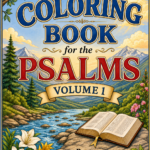 Bible study does not have to be limited to reading, listening, and taking notes. Imagine opening your Bible, selecting an inspiring passage from the Psalms, and bringing its message to life through color, creativity, meditation, and prayer. What if the simple act of coloring could help you slow down, reflect on God’s promises, and discover new meaning in familiar Bible verses? Make Bible Study Colorful is more than a creative suggestion. It is an invitation to experience Scripture in a fresh, personal, and meaningful way.
Click the link to see on Amazon: https://amzn.to/4zxYYj6
As an Amazon Associate, I earn from qualified purchases.
For centuries, Christians have explored God’s Word through reading, preaching, memorization, music, and meditation. Today, Bible coloring books offer another opportunity to engage Scripture by combining artistic expression with spiritual reflection. One resource for this creative approach is Coloring Book for the Psalms Volume 1 by Dale R. Turner. This book invites readers to explore the beauty, encouragement, and spiritual wisdom of the Psalms through coloring. Whether you are a lifelong Christian, a new believer, a Sunday school teacher, a parent, or someone searching for spiritual peace, creative Bible study offers an inviting way to connect with Scripture. Let’s explore how adding color to your Bible study can deepen your understanding of God’s Word and enrich your daily Christian life.
1. Why Make Bible Study Colorful?
Traditional Bible study often emphasizes reading, interpretation, discussion, and memorization. These practices remain essential for Christian spiritual growth. However, people learn and reflect in different ways. Some respond especially well to visual imagery, artistic expression, and hands-on activities. Bible coloring brings an additional dimension to the learning experience. When you color a Scripture-inspired picture, you spend time considering the words and images associated with a biblical message. Rather than moving quickly from one verse to another, you can remain with a single passage and explore its meaning.
Consider Psalm 23:1 (KJV):”The LORD is my shepherd; I shall not want.” Imagine coloring a peaceful landscape with sheep grazing beside a stream while a shepherd watches over them.
As you color the scene, consider the questions:
What does it mean that God is my Shepherd?
How does God guide me through difficult circumstances?
Where have I experienced God’s provision?
How can I trust God more completely?
Suddenly, a familiar verse becomes an opportunity for personal reflection.Creative Bible study encourages us not simply to read Scripture but to spend meaningful time with its message.
2. Discover the Spiritual Beauty of the Psalms.
The Book of Psalms is one of the most beloved books of the Bible. Its 150 chapters express nearly every dimension of human spiritual experience: joy, sorrow, thanksgiving, worship, fear, forgiveness, hope, and trust. The Psalms speak to the heart because they reflect the realities of everyday life. Some Psalms celebrate God’s greatness through the beauty of creation. Others express the struggles of individuals facing uncertainty, disappointment, loneliness, or suffering.Still others invite God’s people into joyful praise. Psalm 19:1 (KJV) declares: “The heavens declare the glory of God; and the firmament sheweth his handywork.” Imagine illustrating this passage with a brilliant sunrise, majestic mountains, colorful skies, and the wonders of creation. Coloring such a scene can encourage meditation on the beauty of God’s world and the wonder of divine creativity.
Psalm 100:2 (KJV) offers another invitation:
“Serve the LORD with gladness: come before his presence with singing.”This passage might inspire a colorful scene of people worshiping, singing, and celebrating God’s goodness. The Psalms are particularly appropriate for creative Bible study because their language is rich with visual imagery, emotional expression, and spiritual meaning.
3. Discover Coloring Book for the Psalms Volume 1.
One way to begin exploring Scripture through creativity is with Coloring Book for the Psalms Volume 1, written by Christian author Dale R. Turner. This book brings together two meaningful activities: engaging biblical Scripture and expressing creativity through coloring. Its central purpose is to encourage readers to spend more time reflecting on God’s Word while enjoying an accessible artistic activity. The Psalms provide an especially powerful foundation for this approach. Their messages about faith, praise, forgiveness, gratitude, hope, and the presence of God can inspire thoughtful coloring experiences. Instead of treating Bible coloring as merely a recreational activity, readers can approach each page as an opportunity for spiritual meditation. The creative process becomes a companion to reading Scripture, asking questions, and praying.
Who can benefit from a Psalms coloring book?
Coloring Book for the Psalms Volume 1 can be used as a resource for several audiences: Adults seeking a peaceful activity that encourages Scripture reflection. Seniors who enjoy combining familiar Bible passages with creative expression. Teenagers looking for engaging ways to explore Christian faith. Children and families developing habits of Bible reading and spiritual conversation. Sunday school classes introducing creative approaches to biblical learning. Small groups seeking a hands-on activity to accompany devotional discussions. This kind of book encourages people across generations to participate in Bible study, regardless of their artistic experience. You do not have to be a professional artist to benefit from coloring the Psalms. You simply need a willingness to explore Scripture with an open mind and heart.
4. How Coloring Can Encourage Peaceful Bible Meditation.
Modern life often moves at an exhausting pace. Many people struggle to find quiet moments away from electronic devices, work responsibilities, social pressures, and daily distractions. Bible coloring offers a practical opportunity to slow down. The repetitive movements involved in coloring can feel calming, while reflecting on Scripture can provide an intentional spiritual focus. Consider Psalm 46:10 (KJV): “Be still, and know that I am God.” These words invite believers to recognize God’s presence amid life’s pressures. Imagine spending twenty minutes coloring a peaceful mountain lake while reflecting on this verse. Rather than worrying about tomorrow, you deliberately focus on God’s presence today. This does not mean coloring automatically removes anxiety or replaces prayer, pastoral support, or professional care when needed. However, it can provide a constructive setting for quiet reflection and personal devotion. Christian coloring books can help create space for stillness, gratitude, prayer, and meditation on God’s promises.
5. Five Practical Ways to Make Bible Study Colorful.
Adding creativity to your devotional routine does not require complicated planning or expensive supplies.
A Bible, a coloring book, colored pencils, and a willingness to explore Scripture are enough to begin.
First: Begin with prayer.
Before opening your coloring book, ask God to guide your understanding. A simple prayer might be: “Lord, open my heart and mind to the meaning of your Word. Help me discover the truth you want me to understand today.” Prayer reminds us that Christian Bible study is more than intellectual exploration. It is also a spiritual encounter with the living God.
Second: Read the Scripture passage carefully.
Do not immediately begin coloring. First, read the selected Psalm slowly. Consider its historical setting, literary message, and theological meaning. Ask what the passage reveals about God and what its message meant to its original audience. Then consider its application to your life.
Third: Select colors that reflect the message.
Colors can become personal symbols during meditation. For example Blue may represent peace, faithfulness, and trust. Green may suggest renewal, growth, and God’s creation. Yellow may symbolize joy, light, and thanksgiving. Purple may remind you of divine majesty and worship. Red may represent love, sacrifice, or courage. These associations are creative choices, not fixed biblical rules. Their purpose is to make your coloring experience more personally meaningful.
Fourth: Reflect while coloring.
As you color, return repeatedly to the Scripture passage. Consider what the words reveal about God’s character. Reflect on the people, images, promises, and spiritual lessons described. Allow the activity to support your concentration rather than distract you from Scripture.
Fifth: Finish with thanksgiving.
When you complete your coloring activity, conclude with prayer. Thank God for the message you have discovered. You might also record a brief observation in a Bible study journal. Over time, these written reflections can become a valuable record of your spiritual growth.
6. Make Family Bible Study More Creative.
One of the most promising applications of Bible coloring is family discipleship. Parents and grandparents frequently search for meaningful ways to introduce children to Scripture. Creative Bible study can provide opportunities for adults and children to learn together. Imagine gathering around a kitchen table with Bibles, coloring pages, and colored pencils. Each family member selects colors for a picture inspired by the same Psalm. While everyone works, an adult reads the passage aloud. Conversation begins naturally.
A child might ask why David compared God to a shepherd. A teenager might wonder why the Psalms contain so many expressions of sadness and struggle. An adult might share how a particular verse provided encouragement during a difficult time. These conversations transform a simple activity into an opportunity for faith formation. Grandparents can also use Bible coloring to share cherished Scripture passages and personal stories with younger generations. Colorful Bible study can help strengthen family relationships while encouraging lifelong engagement with God’s Word.
7. Bring Creativity into Sunday School and Small Groups.
Church leaders constantly seek engaging ways to strengthen Christian education. Bible coloring offers an additional activity that can complement traditional teaching methods. Sunday school teachers might begin a lesson with a Psalm, introduce its historical and theological background, and then invite participants to color an appropriate illustration. Small groups could use coloring activities during periods of prayer and reflection. Women’s groups, men’s fellowships, youth ministries, and intergenerational gatherings could incorporate creative Scripture activities into their programs.
Consider developing a four-week Bible study around the Psalms:
Week One: Trusting God.
Explore Psalm 23 and discuss God’s guidance, protection, and provision.
Week Two: Celebrating Creation.
Study Psalm 19 and reflect on God’s glory revealed through creation.
Week Three: Discovering Gratitude.
Read Psalm 100 and consider the importance of thanksgiving and joyful worship.
Week Four: Finding Spiritual Stillness.
Reflect on Psalm 46 and discuss the role of prayer, trust, and quiet meditation. Each session can include Scripture reading, discussion, creative coloring, and closing prayer. This approach preserves the importance of biblical interpretation while providing another avenue for participation.
8. Make Bible Study Colorful at Every Age.
Creativity is not limited to childhood. Adults sometimes abandon artistic activities because they believe creativity belongs primarily to younger people. Yet Christian faith encourages the continued development of our God-given gifts throughout life. For older adults, Bible coloring can provide an enjoyable activity that complements familiar devotional practices. For younger adults, it may offer an alternative to screen-based entertainment and an opportunity for intentional reflection. Teenagers may find creative Scripture activities especially helpful when they are encouraged to ask questions and express themselves. Children can use colors and pictures to become familiar with biblical themes. The important point is that spiritual learning continues throughout life. The same Psalm may inspire different reflections in a child, a teenager, a parent, and a grandparent. Each generation brings its own experiences, questions, and insights to Scripture.
9. Explore the Connection Between Creativity and Christian Faith.
The Bible begins with the activity of the Creator. Genesis 1:1 (KJV) declares: “In the beginning God created the heaven and the earth.” Creation itself reveals an extraordinary diversity of colors, patterns, shapes, textures, and living things. Sunsets, flowers, forests, oceans, and mountains demonstrate the beauty and variety of the natural world. Human creativity can be understood as one expression of our capacity to respond to the world God has made. Throughout Christian history, believers have communicated biblical truths through music, painting, stained glass, architecture, poetry, and literature. Coloring Scripture-inspired illustrations belongs within this broader tradition of expressing faith through creativity. Art does not replace the written Word of God. Instead, it can help people reflect on biblical messages in memorable and personally meaningful ways. When combined with careful reading, prayer, and theological understanding, creativity can enrich Christian discipleship.
10. Begin Your Own Colorful Bible Study Journey.
You do not need an elaborate Bible study program to begin. Start with ten or fifteen minutes each day.
Choose a Psalm that speaks to your present circumstances. If you are feeling grateful, select a Psalm of thanksgiving. If you are troubled, consider a Psalm expressing trust in God. If you need encouragement, explore passages that celebrate God’s faithfulness. Read the words, reflect on their meaning, and enjoy the creative process. As you continue, consider keeping a collection of completed coloring pages. You might write the date and a short spiritual reflection beside each one. Over several months, this collection can become a visual devotional journal documenting your encounters with Scripture. For those seeking a resource to support this practice, Coloring Book for the Psalms Volume 1 offers a way to combine biblical inspiration with artistic expression. It can also serve as a thoughtful gift for someone who enjoys Scripture, coloring, and Christian devotional activities.
Conclusion: Let God’s Word Fill Your Life with Color.
Bible study is not simply about gathering religious information. It is about learning to know God more deeply, understanding biblical truth, and allowing Scripture to shape everyday life. Creative activities can support that journey. When we combine Bible reading with coloring, prayer, meditation, and thoughtful reflection, familiar passages may become fresh sources of encouragement. The Psalms are especially well suited to this approach because they express the full range of human emotions while continually directing our attention toward God. Coloring Book for the Psalms Volume 1 invites readers to discover this creative connection between artistic expression and spiritual growth.
Whether you are seeking greater peace, meaningful family activities, engaging Sunday school resources, or a refreshing approach to personal devotion, colorful Bible study offers possibilities worth exploring. You do not need exceptional artistic talent, expensive materials, or hours of free time. You simply need a Bible, a little creativity, and a desire to grow in faith. Make Bible study colorful. Make Scripture personal. Make time for God. And discover how the timeless words of the Psalms can inspire a richer, more creative journey of Christian faith.
Discover Coloring Book for the Psalms Volume 1.
Explore the beauty of biblical Scripture through creative coloring and spiritual reflection. Whether for personal devotion, family Bible study, or church activities, discover a fresh way to experience the inspiring messages of the Psalms.
Bible coloring is a creative activity that uses illustrations inspired by Scripture to encourage reflection, learning, and personal devotion. Can Bible coloring help adults study Scripture? Yes. Adults can combine coloring with Bible reading, journaling, prayer, and meditation to create a more engaging devotional experience.
Why are the Psalms ideal for Bible coloring books? The Psalms contain memorable imagery, prayers, expressions of worship, and messages of trust, hope, and thanksgiving that lend themselves to visual interpretation.
Can churches use Bible coloring books in Sunday school? Yes. Coloring activities can supplement lessons, encourage discussion, and support intergenerational Christian education.
Where can I find a Christian coloring book based on the Psalms? One option is Coloring Book for the Psalms Volume 1, which focuses on exploring biblical inspiration through creative coloring.